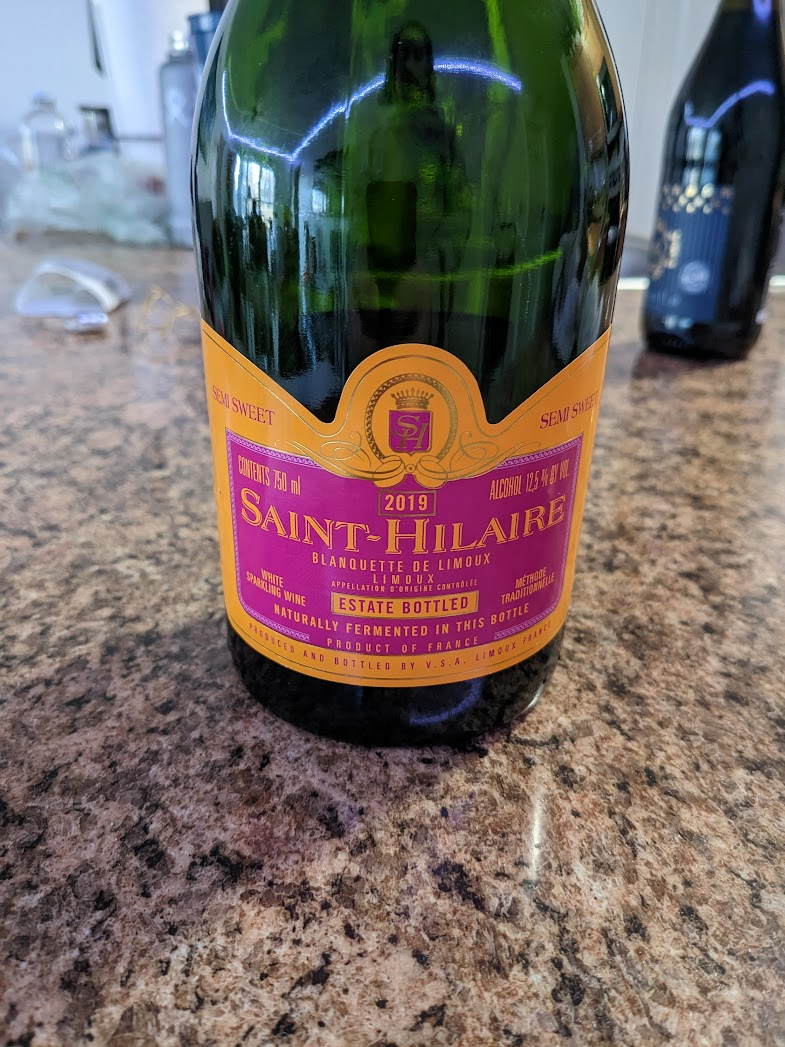
Variety: Lambrusco
Region: Emilia
Country: Italy
Year: 2020
Price: $12
My typical group of wine-tasting buddies decided to take advantage of St. Patrick's day to get some classy and educational drinking done, before the not so classy drinking typical of the holiday. While shopping for party supplies, we picked up a few interesting cheese and some wines to accompany them.
First Tasting
Wine: The Little Sheep of France, Chardonnay, 2020, France
Cheese: Sarvecchio Parmesan
Second Tasting
Wine: Treveri, Syrah, Washington State, USA
Cheese: Murray's Smoked Cheddar

The wine was medium ruby color, with very intense bubbles when poured into the glass. These bubbles dissipated quickly, as they were not present when I tasted the wine. On the nose, I got scents of red fruit and dark berries along with some spiciness. I got decent tannins and good body from the wine, with minimal bubbles. I tasted a lot of dark fruit, specifically blackberry. The cheese was soft, smooth and creamy, as one would expect from cheddar. It was very smoky, and I would say it was my favorite cheese of the whole tasting. Together, the cheese smoothed out the tannins of the wine, and the wine decreased the smokiness of the cheese. The pairing was still good, but since the smokiness was what I liked most about it, I honestly preferred the cheese by itself.
Third Tasting
Wine: Pamiglia Castellani, , Sangiovese, 2016, Toscana, Italy
Cheese: Pecorino Tartufello
The wine was dark ruby, and mostly opaque. On the nose I got notes of dark fruit, cherry and spice. On the palate I got major flutiness, decent tannins and acid, as well as some plum underneath. The cheese was very flavorful and intense, standing out from the other cheeses we tried. It was very soft and creamy, with a very strong, almost garlicy taste. Paired with the wine, the intensity of the cheese was toned down, but I didn't notice a big difference in the wine.Of all the blog assignments, this is the one I was most excited about. I love cheese, and I have always heard about wine-cheese pairing, but have never done it for myself. For this tasting, my typical group got together and went out on shopping trip. We picked up the cheeses first, then headed down the block to the Vintage Cellar to pick up some wines to pair with them. We retuned home, at which time we cut up the cheese, opened up the wine, and got down to the tasting!
First Tasting
Wine: Peirano Estate Chardonnay 2018 Lodi, California, USA
Cheese: Bruggie Comtess
The wine was a medium dark gold, and was mostly clear. It had notes of apple, pineapple, and little bit of barrel must on the nose. On the palate, I got creamy butterscotch and some slight fruit notes, along with a slightly spicy finish. The wine had decent body, given the barrel character and dryness. The cheese was pretty hard, with a very creamy texture and slightly sweet overall taste. I really liked the cheese by itself. Together, the wine and cheese were not greatly changed by each other. The wine had less butterscotch characteristics, allowing the fruit flavors to come forward, but that was about it. Maybe I am just inexperienced and don't know what to look for, but I found this pairing to not be very interesting.Second Tasting
Wine: Summarroca Brut Bubbly Piont Noir Rose Cava, Spain 2020
Cheese: Sartori Bellavitano Garlic and Herb
This wine was a golden-pink color, which was mostly clear and had medium-fine bubbles. On the nose it was light and fruity, with notes of raspberry and strawberry. I had a hard time getting a good smell off this wine, since the carbonation would cover up much of the other smells. On the palate it had notes of strawberry and pear. The carbonation and dryness gave it good body and kept it from being overly sweet. The cheese had a lot of flavor, mostly from the herbs on the outside. It was softer than the previous cheese, and was less sweet. Together, I can't say I noticed a profound difference. With the cheese, I though the wine tasted drier and had less fruit notes, but that's about it. I'm not sure this was the best pairing, but it was still enjoyable.
Third Tasting
Wine: Palacio de Arganza Cabernet Sauvignon 2020
Cheese: Sharp White Cheddar
Overall, I had a great time with my first wine and cheese tasting session. I got to have good food and good conversation with good friends. I am looking forward to the next one!
The objective of Drink This Now! Lesson 1 was to taste a red wine at different times after opening it, as well as with cheese and meat, to discover and learn more about how these factors impact the taste of the wine. My friends and I decided to do this lesson together, so we made a journey down to the wine store to pick out one of the bottles from the list. We settled on a Grand Veneur Cotes du Rhone from 2019. I will start from Step 1, a basic wine tasting, and then work my way through the lesson step by step
Step 1: Wine Tasting
Winery Review
The color is purple-tinged garnet. The bouquet of aromas offers fresh berries (wild raspberry, blackcurrant, blackberry) and hints of spices. The palate is big and full-flavored, with silky-smooth tannins and red and black fruit flavors. The finish introduces touches of licorice and pepper. A Côtes-du-Rhône with great complexity for everyday drinking.
My Review
We opened up the bottle and immediately pour ourselves a glass each. The wine was a dark ruby, and was completely opaque in the glass. On the nose I got hints of strawberry jam, cocoa, as well as some spiciness. On the palate I noticed dark cherry and blackberry. It had decent body, with good tannins and a medium length finish.
Step 2: Let it breath
The second step of the lesson was to leave the bottle open and out of the counter to allow oxygen in to "open up" the wine. We did just that, and upon tasting it we did notice a change to the wine. The tannins were less harsh, making the wine a bit smoother and allowing other flavors, like fruit and spice, to come through. The wine was still recognizable; there wasn't a radical change, but defiantly a noticeable one.
Step 3: Mouse Style
The third step challenged us to then try the wine with some cheese. We chose to go with an Asiago cheese for this tasting. The pairing of wine and cheese brought out a significant change in the wine. Overall we described this as "mellowing out" the wine. The tannins become much less harsh, and some fruit and spice notes which had previously been muted came forward. The cheese greatly changed the character of the wine, I would say for the better.
The fourth step of the lesson instructed us to try the wine with something spicy. We chose pepperoni for this step, and shortly after the cheese was tasted, we dug into the meat. The pepperoni, though not as spicy as we had hoped, still had a profound effect on the wine. This effect was equal, but opposite to that of the cheese. The tannins became heavier, and the wine overall less sweet. Many of the weaker, fruiter notes were gone. Though I found this pairing interesting, I think I preferred the cheese.
Step 5: One Day Later...
For the final step, we had to leave the wine out overnight and taste it to see how extended periods of oxygen exposure impacted the wine. So the next evening my friends and I reconvened and gave the wine another try. The color was the same as the day before, but the smell was very different. Overall it was stronger, and some pickle or olive notes to it. behind that was increased notes of dark fruit compared to earlier. The taste was likewise very different from the day before. The wine was overall lighter bodied, with lower tannins and more fruity notes. However, the finish was much harsher at this point, which some of my friends found very off-putting. I personally didn't think it was that bad.
I found this lesson the be an interesting and enjoyable experience. I was honestly skeptical of the whole concept of oxygen changing the nature of the wine. I thought at most there would be a slight difference after a day, or else it would be completely ruined. However, I learned that in the right conditions, oxygen, and especially food, can have a positive impact on the wine drinking experience.
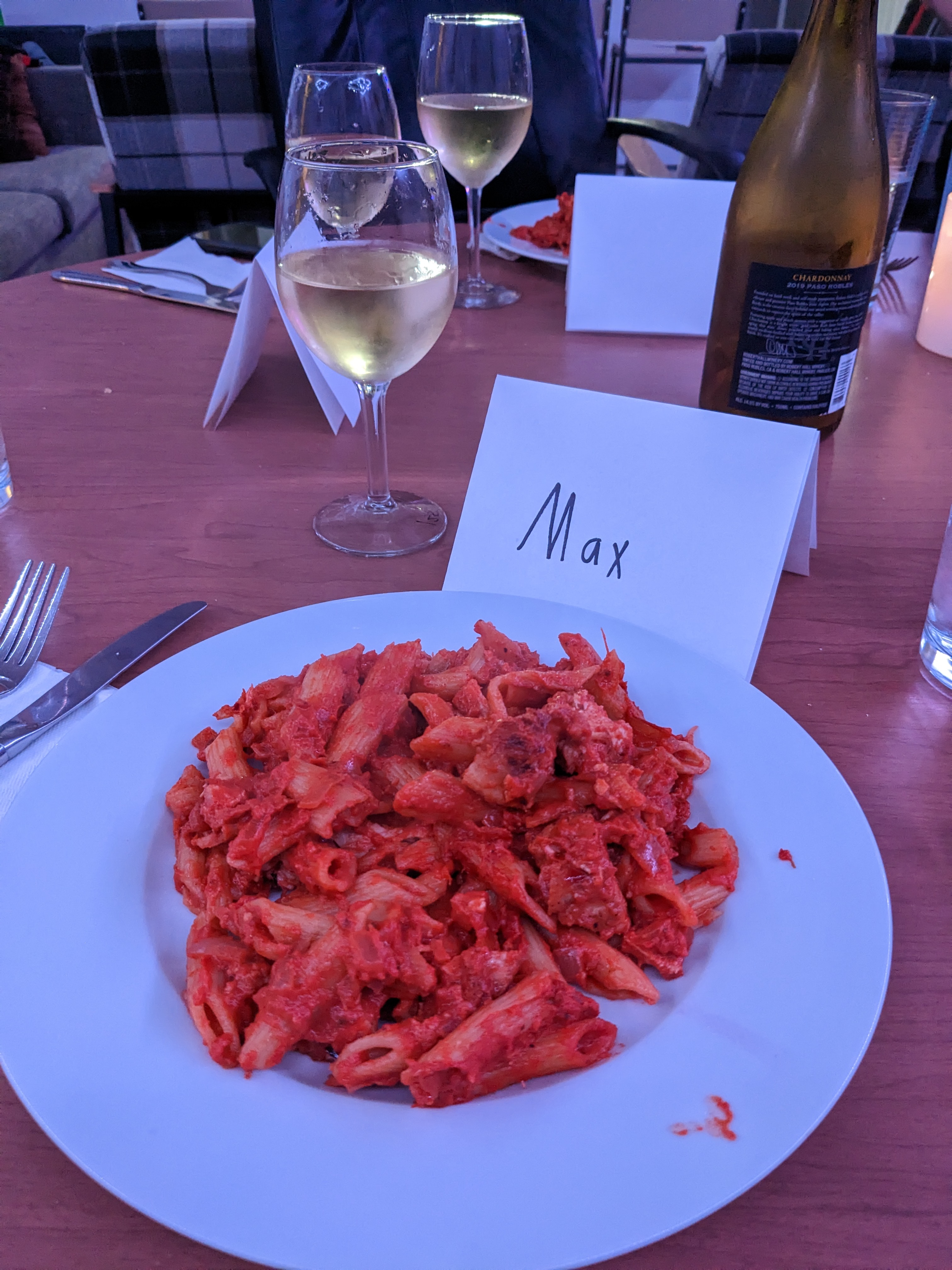
Last Friday, myself and four of my friends had our first wine dinner. We decided to do something of an Italian dinner, which consisted of bread and oil for an appetizer, Chicken Penne alla Vodka for the main course, and chocolate cake for dessert. With this in mind, we made a journey to the Vintage Cellar and asked one of the employees what they thought would pair best with each course. They recommended pretty much anything for bread, a white wine for the main course, and a rich red wine for the dessert. We settled on a Pinot Noir for the appetizer, a Chardonnay for the main course, and a Port for the dessert.
Below I will give a description of each dish, wine, and how they paired.
Appetizer
Food: French style baguette with olive oil. I used extra-virgin olive oil and seasoned it with ground pepper, oregano, red pepper flakes, and a balsamic vinegar reduction.
Wine: Beringer Pinot Noir, California, 2020


Winery Review
Pale pink in color with an orange hue, showing classic aromas of strawberry and redcurrant complemented by floral notes and a hint of cedary oak. Elegant and refreshing in the mouth, with bright red fruit flavours, decent weight and some minerality through the clean finish.
Wine Folly
Pinot Noir is more commonly made into full red wines, while this is a Rosé. I smelled and tasted some of cherry and raspberry notes, and detected some of the earthy mushroom notes described in the text.
My Review
The wine had a rusty pink color, with a light but earthy nose. On the palate, I tasted light notes of red fruit, along with some earthy, mushroom notes. This is the first Rosé that I have tried, so while I liked the wine, I'm not sure how it compares to other Rosé style wines. Overall I liked it, and I am anxious to try more wines of a similar style.
This wine was served alone without food.
Name: The Prince Charming Blue Frizzante Verdejo wine
Winery Review
Name: Cantina Puianello Primabolla Variety: Lambrusco Region: Emilia Country: Italy Year: 2020 Price: $12 Winery Review A soft, ...